

Table of Contents
- What Does It Actually Mean to Be a Content Creator?
- Step 1: Choose Your Platform Wisely
- Step 2: Find Your Niche and Audience
- Step 3: Build a Content Strategy That Works
- Step 4: Equipment on a Budget
- Step 5: Editing and AI Tools for Every Skill Level
- Step 6: The Consistency Framework
- Step 7: Understanding Algorithm Basics
- Step 8: Building a Community, Not Just an Audience
- Step 9: Monetization Paths and Realistic Income Timeline
- Key Takeaways
- Frequently Asked Questions
What Does It Actually Mean to Be a Content Creator?
A content creator is anyone who produces and publishes material – video, audio, writing, photography, or a combination – for a specific audience on digital platforms. That definition sounds simple, but the reality of building a career in content creation is anything but straightforward. In 2026, the creator economy is valued at an estimated $234 billion globally, with over 207 million people worldwide identifying as content creators. Of those, roughly 45 million in the United States alone consider themselves professional creators, though only a fraction earn enough to treat it as a full-time career.
If you want to learn how to become a content creator, the first thing you need to understand is that this is not about going viral overnight or quitting your day job next month. The creators who build lasting careers treat it like a business from day one – even when they have zero followers and zero dollars in revenue. They pick a lane, develop their skills, show up consistently, and gradually build an audience that trusts their voice. This guide walks you through every step of that process, from choosing your platform to earning your first dollar and beyond.
The second thing to understand is that content creation is not a single career path. A food photographer on Instagram, a gaming streamer on Twitch, a personal finance educator on YouTube, and a fiction writer on Substack are all content creators – but their daily work, skill requirements, and income models look completely different. The decisions you make early on about platform, niche, and format will shape your entire creator journey, so it is worth being deliberate about them. In 2026, AI tools have also reshaped the landscape, making it faster and cheaper to produce professional content – but also raising the bar for what audiences expect.
Step 1: Choose Your Platform Wisely
Your platform choice determines everything – the type of content you create, the audience you reach, the skills you need, and how you eventually make money. Here is an honest breakdown of the major platforms for creators in 2026.
YouTube
YouTube remains the most lucrative platform for creators, with the highest average ad revenue per viewer. The YouTube Partner Program pays creators through ad revenue sharing, with RPMs (revenue per mille) typically ranging from $1 to $9 per 1,000 views depending on niche. Finance and tech channels regularly see RPMs above $15, while entertainment and gaming channels average $2 to $5. YouTube Shorts – vertical videos under 60 seconds – now reach over 200 billion daily views and have their own monetization, though Shorts RPM is significantly lower at $0.01 to $0.07 per 1,000 views.
The downside of YouTube is the production barrier. Viewers expect higher quality on YouTube than on any other platform – better thumbnails, better editing, better audio. A TikTok video shot on a phone in your kitchen can get millions of views, but the same production quality on YouTube will struggle. YouTube also has the slowest growth curve. It typically takes 6 to 12 months of consistent publishing to gain real traction, compared to weeks or months on TikTok. However, channels that combine Shorts with long-form content grow 41% faster than those using only one format.
TikTok
TikTok offers the fastest path to audience growth for new creators. The algorithm is specifically designed to surface content from unknown accounts, which means a first-time poster can theoretically reach millions of viewers with a single video. In practice, reaching 10,000 to 100,000 views on TikTok is dramatically easier than on any other platform. The TikTok Creator Rewards Program (which replaced both the original Creator Fund and the Creativity Program Beta) pays creators approximately $0.40 to $1.00 per 1,000 qualified views for videos over one minute long, with high-RPM niches reaching $1.50 to $2.00 or more. This represents a 10 to 25 times increase over the original Creator Fund rates.
TikTok’s weakness is monetization depth. While the platform excels at discovery and virality, converting TikTok viewers into paying customers, email subscribers, or loyal fans is harder than on YouTube or through a blog. TikTok audiences tend to be loyal to content rather than creators, which means your views can fluctuate wildly from video to video. Many successful TikTok creators use the platform primarily as a top-of-funnel discovery tool, driving traffic to YouTube, email lists, or products where the real money is made. TikTok Shop has also become a significant revenue channel, allowing creators to sell products directly through the platform and earn commissions on sales.
Instagram has evolved into a short-form video and AI-curated discovery platform that rewards creators who master Reels, Stories, and carousel posts. Instagram’s head Adam Mosseri confirmed in early 2026 that roughly 50% of the content users see in their feed now comes from accounts they do not follow, served by the recommendation algorithm. This means every piece of content you post has the potential to reach far beyond your existing followers. The platform skews slightly older and more affluent than TikTok, making it particularly valuable for creators in lifestyle, fashion, food, travel, fitness, and business niches. Instagram’s monetization comes primarily through brand deals and affiliate marketing, with creators charging $10 to $100 per 1,000 followers for a sponsored post depending on engagement rate and niche.
Blogging and Newsletter Platforms
Written content creation through blogs (WordPress, Ghost) or newsletters (Substack, Beehiiv, ConvertKit) is the most overlooked path for new creators. Blogging requires less equipment than video or audio, builds an owned asset (your website) that is not dependent on any platform’s algorithm, and compounds in value over time through SEO. A well-written blog post can generate traffic for years, while a social media post has a lifespan of hours to days. Newsletter creators on Substack have built six-figure businesses from writing alone – Lenny Rachitsky’s tech newsletter generates over $5 million annually with a paid subscriber model.
The best strategy for most new creators is to choose one primary platform and one secondary platform. Your primary platform is where you create your best content. Your secondary platform is where you repurpose that content to reach new audiences. For example: create long-form YouTube videos (primary) and cut them into TikTok clips (secondary). Or write a weekly blog post (primary) and share key insights as Instagram carousels (secondary).
Step 2: Find Your Niche and Audience
The word “niche” gets thrown around constantly in creator advice, but finding your niche is genuinely the most important strategic decision you will make. A niche is not just a topic – it is the intersection of a specific topic, a specific audience, and a specific angle that makes your content different from what already exists.
Start with what you know. What topics could you talk about for an hour without notes? What do friends and coworkers ask you for advice about? What do you research in your free time not because you have to, but because you want to? Your niche should be something you can create content about consistently for years, so genuine interest matters more than perceived profitability.
Next, validate demand. Search your topic ideas on YouTube, TikTok, and Google to see what content already exists and how much engagement it gets. Use tools like Google Trends, YouTube’s search suggest feature, and TubeBuddy or vidIQ (browser extensions with free tiers) to assess search volume. If nobody is creating content in your niche, that is usually a bad sign – it means there may not be enough audience interest to sustain a creator. If your niche is saturated with massive creators, you need a sharper angle. The sweet spot is a niche with proven demand but room for a fresh perspective.
Some of the most profitable niches for content creators in 2026 include personal finance (CPMs of $20 to $35), B2B technology ($15 to $28 CPM), health and fitness (massive audience), AI tools and tutorials (rapidly growing search demand), cooking and recipes (evergreen search traffic), career and professional development (B2B sponsor interest), and parenting (loyal, engaged audience). But profitability should be a secondary consideration. The creators who succeed long-term are the ones who genuinely enjoy what they create.
Define your target audience as specifically as possible. “People interested in fitness” is too broad. “Women aged 25 to 40 who want to start strength training but feel intimidated by gym culture” is specific enough to create focused, resonant content. When you know exactly who you are talking to, every piece of content becomes easier to plan, create, and promote.
Step 3: Build a Content Strategy That Works
A content strategy is simply a plan for what you will create, when you will publish it, and why each piece of content exists. Without a strategy, you end up creating random content with no cohesion, burning out from decision fatigue, and wondering why your growth has stalled.

Divide your content into three categories. First, discovery content – pieces designed to reach new people. These are trending topics, searchable questions, and shareable formats that bring strangers into your world. On YouTube, this is the video targeting a high-search-volume keyword. On TikTok, it is the trend-jacking video with broad appeal. On a blog, it is the SEO-optimized article answering a common question.
Second, depth content – pieces designed to build trust and authority. These are in-depth tutorials, personal stories, expert interviews, and detailed analyses that demonstrate your knowledge and give existing viewers a reason to keep coming back. This is the content that converts casual viewers into subscribers.
Third, community content – pieces designed to strengthen your relationship with existing fans. These are Q&A sessions, behind-the-scenes looks, polls, responses to comments, and content that makes your audience feel seen and heard. This is the content that converts subscribers into superfans who buy your products and recommend you to their friends.
A healthy content mix is roughly 40% discovery, 40% depth, and 20% community. Plan your content in batches – sit down once a week or once a month, brainstorm ideas for each category, and schedule them on a content calendar. Tools like Notion, Trello, and Google Sheets all work for content calendars. The tool does not matter – the habit of planning ahead does.
Step 4: Equipment on a Budget
One of the most common excuses for not starting is “I do not have good enough equipment.” The truth is that your smartphone is already a better camera than what most professional creators used five years ago. Here is what you actually need at each budget level to understand how to become a content creator without breaking the bank.
The $0 Setup (Your Phone)
Any smartphone made after 2021 can shoot 4K video, take high-quality photos, record decent audio (especially with the built-in microphone positioned close to your mouth), and run free editing apps. For written content, you need nothing but a computer or even a phone with a keyboard. Many successful TikTok and Instagram creators produce all their content on a phone with no additional equipment.
The $100 to $200 Budget Setup
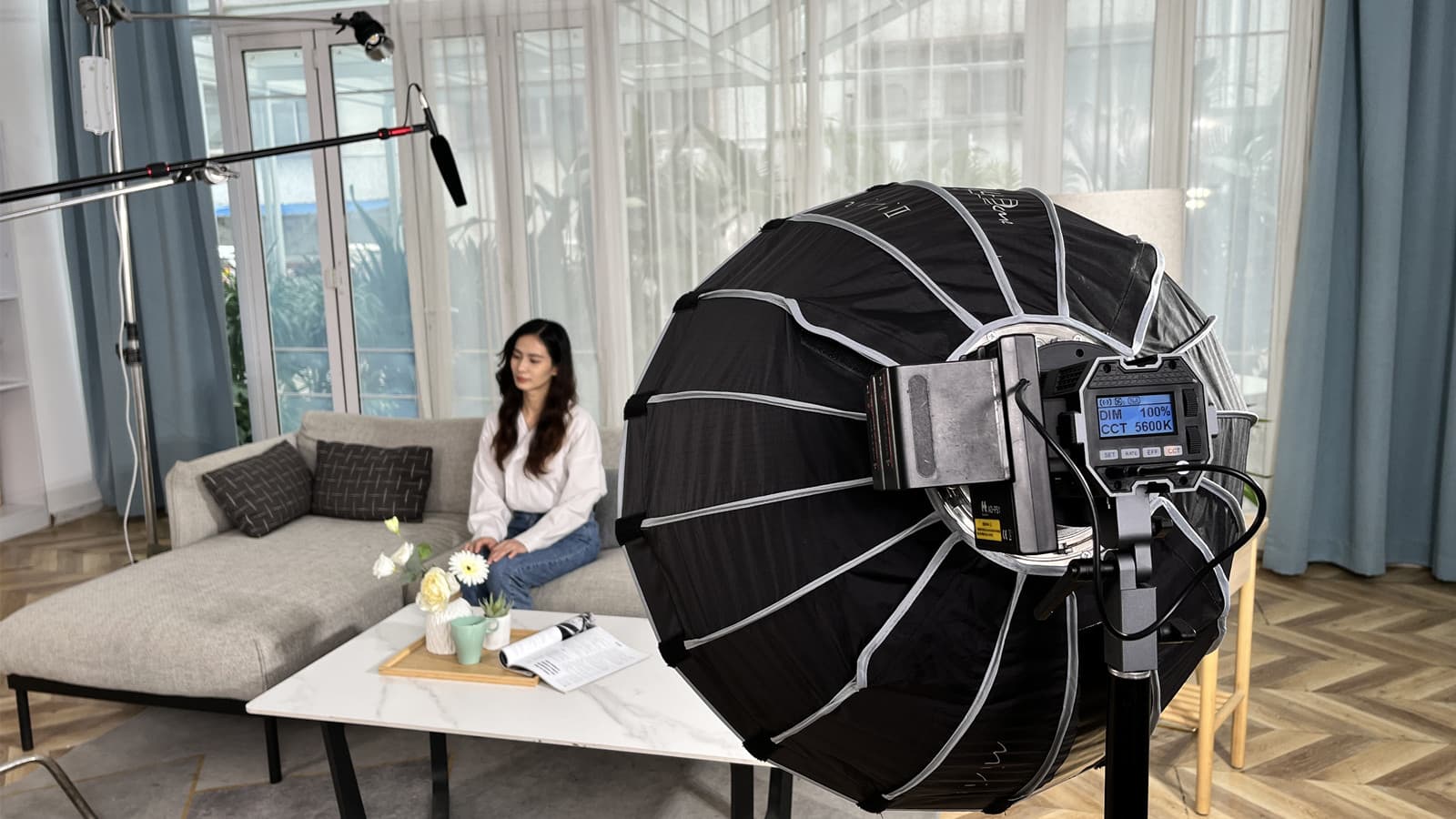
A ring light ($25 to $40) dramatically improves video and photo quality by providing even, flattering lighting. A phone tripod with a flexible mount ($15 to $25) keeps your shots steady and frees up your hands. A clip-on lavalier microphone ($20 to $30) like the Rode smartLav+ or a wireless option like the Hollyland Lark M2 gives you significantly better audio than your phone’s built-in mic. Budget 20 to 30% of your camera investment for essential accessories.
The $500 to $1,000 Upgrade
When you are ready to invest, budget-friendly mirrorless cameras have become incredibly capable in 2026. The Sony ZV-1F (around $400) is built specifically for vlogging with a 1-inch sensor, excellent autofocus, and a built-in high-quality microphone. The Canon EOS R100 (around $480 with kit lens) delivers a 24.2-megapixel sensor, 4K video, and room to grow with interchangeable lenses. For those with a bigger budget, the Canon EOS R50 (around $680) or Sony ZV-E10 II (around $800) offer professional-grade features. A USB condenser microphone like the Rode NT-USB Mini ($80) handles voiceovers and podcasting. A two-point lighting kit ($60 to $100) using softbox or LED panel lights creates studio-quality visuals in any room.
The most important investment is not equipment – it is skills. A creator who understands lighting, framing, and audio basics will produce better content on a phone than someone with a $3,000 camera who ignores those fundamentals. Watch free YouTube tutorials on basic cinematography, lighting techniques, and audio recording before spending money on gear.
Step 5: Editing and AI Tools for Every Skill Level
Editing transforms raw footage and recordings into polished content. In 2026, AI tools have dramatically changed the editing landscape, making professional-quality results accessible to beginners. Here is the current toolkit every new creator should know about.
Video Editing
For phone-based editing, CapCut (free) remains the industry standard for short-form video. It offers professional features like keyframing, chroma key, speed ramping, and AI-powered captions – all in a mobile app. Most TikTok and Instagram Reels creators edit exclusively in CapCut. For desktop editing, DaVinci Resolve (free) is a professional-grade video editor that competes with software costing hundreds of dollars. Adobe Premiere Pro ($22.99/month) and Final Cut Pro ($299 one-time purchase for Mac) remain popular for YouTube creators producing higher-end content. Opus Clip is a newer AI tool that automatically finds the most compelling moments in long videos and generates short-form clips optimized for each social platform – perfect for repurposing long-form content into Shorts, Reels, and TikToks.
AI-Powered Creator Tools
The biggest shift in content creation for 2026 is the rise of AI assistants. ChatGPT and Claude help with brainstorming ideas, writing scripts, drafting captions, and planning content calendars. Descript ($24/month) offers text-based audio and video editing where you edit a transcript and the media follows – plus its AI can remove filler words and generate studio-quality audio. Adobe Podcast (free AI tool) can enhance audio recorded in poor conditions, removing echo and background noise. Perplexity AI has become essential for research, providing source-backed answers faster than traditional searching. Canva’s Magic Studio features now include AI-generated templates, background removal, and design suggestions that make professional graphics accessible to everyone.
Photo Editing
Canva (free with a $13/month Pro tier, now with over 260 million monthly active users) handles thumbnails, social media graphics, and basic photo editing. Lightroom ($10/month) is essential for photographers who need precise color grading and batch editing. For quick social media photo editing, Snapseed (free) and VSCO (free with premium features) are popular mobile options.
Writing and Newsletter Tools
Google Docs (free) works for drafting. Grammarly (free with premium) catches errors and improves clarity with AI-powered suggestions for tone and style. Hemingway Editor (free web version) helps simplify your writing. For newsletters, Substack (free, takes 10% of paid subscriptions), Beehiiv (free up to 2,500 subscribers), and ConvertKit ($15/month) are the top platforms. WordPress ($4 to $25/month for hosting) remains the most flexible option for blogging with full SEO control. Surfer SEO helps optimize written content for search rankings by analyzing top-performing pages for your target keywords.

Step 6: The Consistency Framework
Consistency is the single most important factor in creator success, and it is also the one most people fail at. Research from every major platform shows that creators who publish on a regular schedule grow faster than those who publish sporadically – even if the sporadic creator produces “better” individual pieces of content.
The key is to set a publishing frequency you can actually maintain. Posting daily for two weeks and then disappearing for a month is worse than posting twice a week for a year straight. Here is a realistic framework based on platform norms in 2026.
YouTube long-form: 1 video per week is the gold standard. If that is too much, 2 videos per month is still enough to grow. Many successful channels publish every 2 to 3 weeks and do extremely well because each video is exceptional quality. Pair your long-form uploads with 3 to 5 Shorts per week to accelerate subscriber growth.
TikTok/Instagram Reels/YouTube Shorts: 3 to 7 short videos per week is ideal for growth. Short-form video rewards volume because each piece is a new opportunity to reach a fresh audience. Batch filming – shooting 5 to 10 videos in one session – makes this frequency sustainable.
Blog/Newsletter: 1 post per week is the standard for most successful bloggers and newsletter writers. Bi-weekly works if each piece is exceptionally thorough. Weekly publishing keeps you in your audience’s consciousness and generates consistent search traffic over time.
Instagram feed posts: 3 to 5 Reels per week plus daily Stories. Instagram’s algorithm in 2026 heavily favors Reels over static posts for reaching non-followers, and consistent Story engagement correlates with better Reel distribution.
Build systems to make consistency easier. Batch your content creation – dedicate specific days to filming, editing, and publishing rather than doing everything last-minute. Use scheduling tools (Buffer, Later, Hootsuite for social media; WordPress scheduling for blogs) to queue content in advance. Create templates for recurring content formats so you do not start from scratch every time. And give yourself permission to publish “good enough” content instead of waiting for perfection. A published video that is 80% as good as you wanted is infinitely more valuable than a perfect video that stays on your hard drive.
Step 7: Understanding Algorithm Basics
Every platform uses algorithms to decide which content gets shown to which users. You do not need to understand the technical details, but you do need to understand the behavioral signals each platform optimizes for in 2026.
YouTube’s algorithm has shifted from optimizing purely for watch time to optimizing for viewer satisfaction. It wants to show videos that viewers find genuinely valuable – measured through retention rate, click-through rate, likes, and post-view engagement (sharing, subscribing, commenting). YouTube has also fully decoupled the Shorts recommendation engine from long-form content, meaning your Shorts and long-form videos are evaluated by separate systems. The practical implication: focus on hooks that grab attention in the first 5 seconds, deliver on your title’s promise, and keep your content engaging throughout.
TikTok’s algorithm optimizes for engagement signals – watch time, replays, shares, comments, and saves. Videos must be at least 1 minute long to qualify for the Creator Rewards Program, and viewers must watch a significant portion for views to count as “qualified.” The algorithm tests every video with a small initial audience regardless of follower count, which is why new creators can break through on TikTok faster than anywhere else.
Instagram’s algorithm in 2026 now uses an “Originality Score” to detect recycled clips – reposting content with TikTok watermarks or reusing trending content verbatim will tank your reach. The three most important ranking signals are watch time (especially the 3-second hold rate), likes per reach, and sends per reach (DM shares). Shares via DM are now the most powerful signal for reaching new audiences. Reels with strong 3-second hold rates above 60% outperform those with weak holds by 5 to 10 times in total reach.
Google’s search algorithm (relevant for bloggers) evaluates content quality, relevance to the search query, website authority, user experience, and E-E-A-T – Experience, Expertise, Authoritativeness, and Trustworthiness. Blogging is a longer game than social media, but the traffic compounds over time in ways that social platforms cannot match.
The universal principle across all platforms is this: create content that genuinely serves your audience. Algorithms are designed to surface content that users want to see. If your content is helpful, entertaining, or inspiring – and if you format and present it well – the algorithms will eventually work in your favor.
Step 8: Building a Community, Not Just an Audience
An audience watches your content. A community engages with it, talks about it, and advocates for it. The difference between a creator with 100,000 passive followers and one with 10,000 engaged community members is enormous – the smaller, engaged community will almost always generate more revenue, more opportunities, and more satisfaction.
Building community starts with interaction. Reply to every comment on your content, especially in your first year. Ask questions in your posts and videos that invite responses. Feature audience contributions in your content – read comments, answer questions, showcase fan work. When people feel seen and heard, they become invested in your success.

Create spaces for your community to gather. A Discord server, a private Facebook group, a Telegram channel, or a community section on your YouTube channel gives your audience a place to connect not just with you but with each other. When community members form relationships with one another around shared interest in your content, the community becomes self-sustaining and much more sticky than a one-directional audience.
Collaborate with other creators in your niche. Collaborations expose both creators’ audiences to each other and build credibility through association. Instagram’s Collab feature lets a single post appear on two accounts simultaneously, doubling your initial distribution pool. Start by supporting other creators genuinely – share their content, leave thoughtful comments, engage with their community – before asking for a collaboration.
Step 9: Monetization Paths and Realistic Income Timeline
There are multiple ways to make money as a content creator, and the most successful creators diversify across several revenue streams. Here are the primary monetization paths, listed roughly in the order most new creators access them.
Platform Ad Revenue
YouTube pays creators through the Partner Program once they reach 1,000 subscribers and either 4,000 watch hours or 10 million Shorts views in 90 days. An entry-level tier now exists at 500 subscribers with 3,000 watch hours or 3 million Shorts views, giving access to fan-funding features like Super Chat and channel memberships. Average RPMs range from $1 to $9 per 1,000 views depending on niche. TikTok’s Creator Rewards Program pays $0.40 to $1.00 per 1,000 qualified views for videos over one minute, with top niches earning up to $2.00. These payouts are passive – you earn money every time someone watches your content – but they require significant viewership to generate meaningful income.
Brand Sponsorships and Deals
Brands pay creators to feature their products or services in content. In 2026, the influencer marketing industry is projected to reach $40.5 billion, and brands are increasingly working with smaller creators. Nano-influencers (1,000 to 10,000 followers) can earn $50 to $300 per sponsored post. Micro-influencers (10,000 to 100,000 followers) earn $250 to $1,000 per Instagram feed post and $200 to $1,000 per TikTok video. A growing trend in 2026 is hybrid compensation models where brands offer a guaranteed base rate plus performance earnings tied to sales or conversions.
Affiliate Marketing
You recommend products with special tracking links and earn a commission when someone purchases through your link. Amazon Associates pays 1 to 10% depending on the product category. Software affiliate programs often pay 20 to 50% recurring commissions. Affiliate marketing works best when you create content where product recommendations are natural – like tech reviews, beauty tutorials, or fitness gear roundups. You can start affiliate marketing from day one with no minimum audience requirement.
Digital Products
E-books, online courses, templates, presets, printables, and other digital products offer the highest profit margins because you create them once and sell them indefinitely. Platforms like Teachable, Kajabi, and Gumroad make it straightforward to build and sell digital products. A YouTube cooking creator might sell a recipe e-book for $15. An Instagram photographer might sell Lightroom presets for $29. Digital products become viable once you have an engaged audience that trusts your expertise, typically around 2,000 to 10,000 followers.
Memberships and Subscriptions
Platforms like Patreon, Buy Me a Coffee, YouTube Memberships, and Substack’s paid tier let your biggest fans support you directly with monthly payments. In exchange, they get exclusive content, early access, community perks, or simply the satisfaction of supporting a creator they love. Even 50 to 100 paying members at $5 to $10 per month generates $250 to $1,000 in predictable monthly revenue. The key advantage of subscription income is its stability compared to the inherent unpredictability of brand deals.
Merchandise
Print-on-demand services like Printful, Spring, and Fourthwall let you sell custom-branded merchandise with no upfront inventory cost. You design the products, list them in your store, and the service handles printing and shipping when orders come in. Merchandise works best when your community is strongly identified with your brand – they are buying a symbol of belonging, not just a product.
Realistic Income Timeline
Here is what most creators experience financially as they learn how to become a content creator. Months 1 to 3: $0 in most cases. You are building your skills and your first audience. Months 3 to 6: $0 to $100 per month from small affiliate commissions or platform ad revenue. Months 6 to 12: $100 to $500 per month if you are growing consistently, through a mix of ads, affiliates, and possibly your first small brand deal. Year 1 to 2: $500 to $2,000 per month for creators who have built a solid audience (10,000+ followers or 1,000+ email subscribers). Year 2 to 3: $2,000 to $10,000 per month for creators who have diversified their income streams and built products or services. Year 3+: $10,000+ per month is achievable for creators who treat content creation as a serious business.
These are not guarantees – they are realistic ranges based on data from creator surveys and platform analytics. Many creators never reach full-time income levels, and that is okay. Content creation can be a fulfilling side project, a portfolio builder, or a lead generation tool for a separate business even if it never becomes your primary income source.
Key Takeaways
- Choose one primary platform and one secondary platform – do not try to be everywhere at once when starting out.
- Your niche should be specific enough to describe in one sentence and should sit at the intersection of your knowledge, interest, and audience demand.
- A smartphone is sufficient equipment to start – invest in a ring light ($25 to $40) and clip-on microphone ($20 to $30) before buying a camera.
- AI tools like ChatGPT, Claude, Descript, and Opus Clip have made professional content creation faster and more accessible in 2026 – use them as assistants, not replacements for your authentic voice.
- CapCut (free) for short-form video, DaVinci Resolve (free) for long-form video, and Canva (free) for graphics handle most new creators’ editing needs.
- Consistency beats quality in the early stages – a good video every week grows an audience faster than a perfect video every two months.
- Divide your content into discovery (reaching new people), depth (building trust), and community (strengthening relationships) for balanced growth.
- Expect 6 to 12 months of consistent work before earning meaningful income from content creation.
- Diversify revenue streams – do not rely on a single platform’s ad program for your entire income.
- Build a community, not just an audience – engaged fans who feel connected to you and each other are worth more than millions of passive followers.
Frequently Asked Questions
How to become a content creator with no experience?
Start by consuming content in your desired niche and analyzing what works. Then begin creating and publishing immediately – your first 10 to 20 pieces will not be great, and that is normal. Use free tools (your phone camera, CapCut, Canva) and AI assistants (ChatGPT for brainstorming, Descript for editing) to remove barriers. Focus on improving one skill at a time. Watch tutorials on basic cinematography, editing, and storytelling. Most importantly, publish consistently and learn from audience feedback. Every successful creator started with no experience.
How long does it take to start making money as a content creator?
Most creators see their first revenue between months 3 and 12, depending on their platform and strategy. Affiliate marketing and digital products can generate small amounts from a small audience, while platform ad revenue typically requires reaching specific thresholds (like YouTube’s 1,000 subscribers and 4,000 watch hours, or TikTok’s 10,000 followers and 100,000 views in 30 days for the Creator Rewards Program). Reaching a sustainable part-time income ($500 to $2,000/month) usually takes 12 to 24 months of consistent effort. Full-time income ($3,000+/month) typically takes 2 to 3 years.
Do I need to show my face to be a successful content creator?
No. Faceless content creation is a viable and growing niche. YouTube channels in categories like meditation, nature sounds, animation, gaming, cooking (hands-only), and educational content (using screen recordings, whiteboard animations, or AI-generated visuals with voiceover) regularly achieve hundreds of thousands of subscribers without the creator ever showing their face. The key is that your content still needs a distinctive personality – your voice, editing style, or storytelling approach – even without a visible face.
What is the best platform to start content creation on in 2026?
It depends on your strengths and goals. TikTok offers the fastest growth for short-form video creators, with the Creator Rewards Program now paying meaningfully for videos over one minute. YouTube offers the best long-term monetization for video creators willing to invest in production quality, and combining Shorts with long-form content accelerates growth by 41%. Instagram works well for visual creators in lifestyle niches. Substack and blogging are ideal for writers. If you are unsure, start with short-form video on TikTok or YouTube Shorts (lowest production barrier, fastest feedback loop) and expand from there.
How many followers do I need to get brand deals?
Brand deals become accessible at around 1,000 to 5,000 followers if your engagement rate is strong and your niche aligns with the brand’s target audience. In 2026, approximately 65% of Instagram influencer spending goes to creators with fewer than 100,000 followers, as brands have learned that smaller creators with engaged audiences often generate better ROI than mega-influencers. Platforms like AspireIQ, Grin, Collabstr, and IZEA connect creators with brands actively looking for partnerships. You can also reach out directly to brands you genuinely use and love.