
Table of Contents
- What Is Bollywood, Really?
- A Brief History of Bollywood
- What Makes Bollywood Different From Hollywood
- The Role of Music and Dance
- Iconic Bollywood Stars You Should Know
- Essential Bollywood Films for Beginners
- Beyond Bollywood: India’s Other Film Industries
- Bollywood’s Global Cultural Impact
- Where to Watch Bollywood Films
- Key Takeaways
- Frequently Asked Questions
What Is Bollywood, Really?
Getting Bollywood explained for beginners starts with clearing up a common misconception: Bollywood is not the entire Indian film industry. It specifically refers to the Hindi-language film industry based in Mumbai (formerly Bombay – hence the “B” in Bollywood). India actually has over 20 distinct regional film industries producing content in languages including Tamil, Telugu, Malayalam, Kannada, Bengali, and Marathi. When people outside India say “Bollywood,” they usually mean all Indian cinema – but technically, it refers only to the Mumbai-based Hindi film sector.
That said, Bollywood is by far the most commercially prominent and internationally recognized segment of Indian cinema. It produces approximately 1,500-2,000 films per year, making it one of the largest film industries on the planet by volume. For comparison, Hollywood releases roughly 700-800 films annually. The Indian film industry as a whole produced over 3,000 films in 2024, generating approximately $2.8 billion in domestic box office revenue and an additional $600 million internationally.
Bollywood explained for beginners in a single sentence: it is a massive, culturally rich film industry that blends drama, romance, action, comedy, music, and dance into a distinctly Indian cinematic experience that has captivated audiences across South Asia, the Middle East, Africa, and increasingly the Western world.
The audience for Bollywood is staggering. An estimated 3.6 billion cinema tickets are sold annually in India – nearly three times the number sold in North America. And the Indian diaspora, numbering over 32 million people worldwide, creates strong demand for Bollywood content across every continent.
A Brief History of Bollywood
India’s film history stretches back to the very beginning of cinema. Dadasaheb Phalke, often called the father of Indian cinema, directed “Raja Harishchandra” in 1913 – a silent film based on Hindu mythology that is considered the first full-length Indian feature. The first Indian talkie (sound film), “Alam Ara,” arrived in 1931, and music was incorporated from the very beginning, establishing a tradition that continues today.

The Golden Age of Indian cinema spans roughly the 1940s through the 1960s. During this era, directors like Satyajit Ray, Guru Dutt, and Raj Kapoor created films of extraordinary artistic quality. Satyajit Ray’s “Pather Panchali” (1955) is widely regarded as one of the greatest films ever made and brought Indian cinema to international attention. Raj Kapoor, known as “the showman,” became Bollywood’s first global star, with massive popularity across the Soviet Union, China, and the Middle East.
The 1970s introduced the “masala” film – a formula blending action, romance, comedy, drama, and music into a single crowd-pleasing package. The era was dominated by Amitabh Bachchan, whose “angry young man” persona in films like “Sholay” (1975) and “Deewar” (1975) made him the biggest star in Indian cinema history. “Sholay” remains one of the highest-grossing Indian films when adjusted for inflation.
The 1990s and 2000s saw Bollywood modernize significantly. Shah Rukh Khan rose to become the industry’s reigning superstar with romantic blockbusters like “Dilwale Dulhania Le Jayenge” (1995) – a film that ran continuously at Mumbai’s Maratha Mandir cinema for over 25 years. Production values increased dramatically, overseas shooting became common, and the industry began targeting the global diaspora market. The 2000s also saw Bollywood films gaining wider recognition at international festivals and awards.
Today’s Bollywood is in a fascinating transitional period. Traditional star-driven formula films coexist with content-driven cinema that tackles social issues, psychological complexity, and unconventional narratives. Streaming platforms like Netflix, Amazon Prime Video, and Disney+ Hotstar have expanded the types of stories being told, and a new generation of filmmakers is pushing creative boundaries while maintaining Bollywood’s distinctive entertainment DNA.
What Makes Bollywood Different From Hollywood
Having Bollywood explained for beginners requires understanding the fundamental differences between Indian and Western cinema – differences that go beyond surface elements like song-and-dance sequences.
Emotional Maximalism
Bollywood embraces big emotions without reservation. Where Hollywood often values subtlety and restraint, Bollywood celebrates the full spectrum of human feeling – ecstatic joy, devastating grief, passionate love, fierce anger – expressed boldly and without irony. This emotional maximalism is rooted in the Indian aesthetic theory of “rasa” – the idea that art should evoke specific emotional states in the audience. A good Bollywood film aims to take viewers on a complete emotional journey.
Song and Dance Integration
Music is not an add-on in Bollywood – it is integral to storytelling. Songs advance the plot, express internal emotions that dialogue cannot capture, and create the most memorable moments in a film. A typical Bollywood film includes 5-7 songs, and the film’s soundtrack is often released weeks before the movie as a marketing tool. Some of the biggest Bollywood hits are remembered primarily for their music.
Film Length and Structure
Bollywood films are typically longer than Hollywood films – 2.5 to 3 hours is standard, with an intermission break (the “interval”) roughly at the midpoint. The interval is a narrative tool: filmmakers build to a major dramatic moment at the halfway point, give the audience a break to process and buy snacks, then escalate the story in the second half. This structure allows for more subplots, character development, and emotional complexity than the standard Hollywood 90-120 minute format.
Family and Social Themes
Family relationships, honor, duty, social class, and community are central themes in most Bollywood films. The tension between individual desire and family expectation is perhaps the most recurring narrative conflict. Romance is usually framed within the context of family approval, social compatibility, and cultural tradition. This reflects Indian society’s collectivist orientation, where family and community carry immense weight in personal decisions.
The Role of Music and Dance
No aspect of Bollywood explained for beginners is as distinctive as its music and dance traditions. Bollywood music is its own massive industry – the Indian music market generates over $300 million annually, and Bollywood soundtracks account for a significant portion of that revenue. Songs from popular films dominate radio, streaming playlists, and public spaces across India and the diaspora.
Bollywood music has evolved through several distinct eras. The classical period (1940s-1960s) featured compositions deeply rooted in Indian classical music (ragas and talas), performed by legendary playback singers like Lata Mangeshkar, whose career spanned seven decades and who recorded over 25,000 songs. The disco era (1970s-1980s) blended Western pop influences with Indian rhythms. The 1990s brought a fusion of Indian and Western electronic elements, pioneered by composer A.R. Rahman, whose soundtrack for “Roja” (1992) revolutionized Bollywood music and later won him two Oscars for “Slumdog Millionaire.”
Modern Bollywood music incorporates hip-hop, EDM, reggaeton, and global pop trends while maintaining distinctly Indian melodic and rhythmic foundations. Songs like “Naatu Naatu” from “RRR” (which won the Oscar for Best Original Song in 2023) demonstrate how Bollywood music can transcend cultural boundaries.
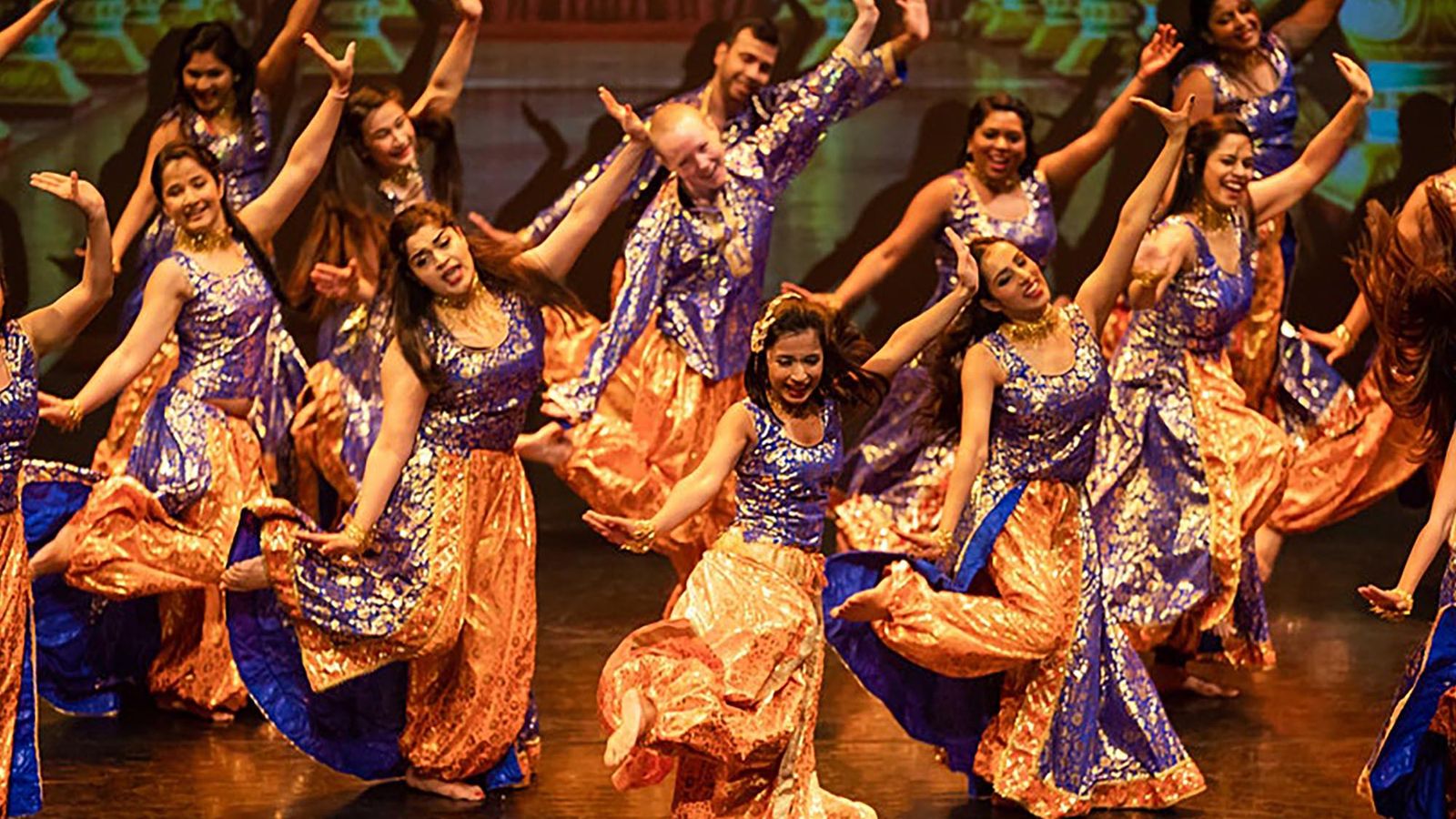
Bollywood dance is equally diverse, drawing from Indian classical dance forms (Bharatanatyam, Kathak, Odissi), folk traditions (Bhangra, Garba, Lavani), and contemporary Western styles (hip-hop, contemporary, jazz). Choreographers like Farah Khan and Prabhu Deva have created iconic dance sequences that are studied and replicated worldwide. Dance scenes serve narrative purposes – a joyful song celebrates love, a rain sequence represents romantic longing, and a group dance number builds community and celebration.
Iconic Bollywood Stars You Should Know
Bollywood’s star system is among the most powerful in global cinema. Understanding the key players helps when getting Bollywood explained for beginners.
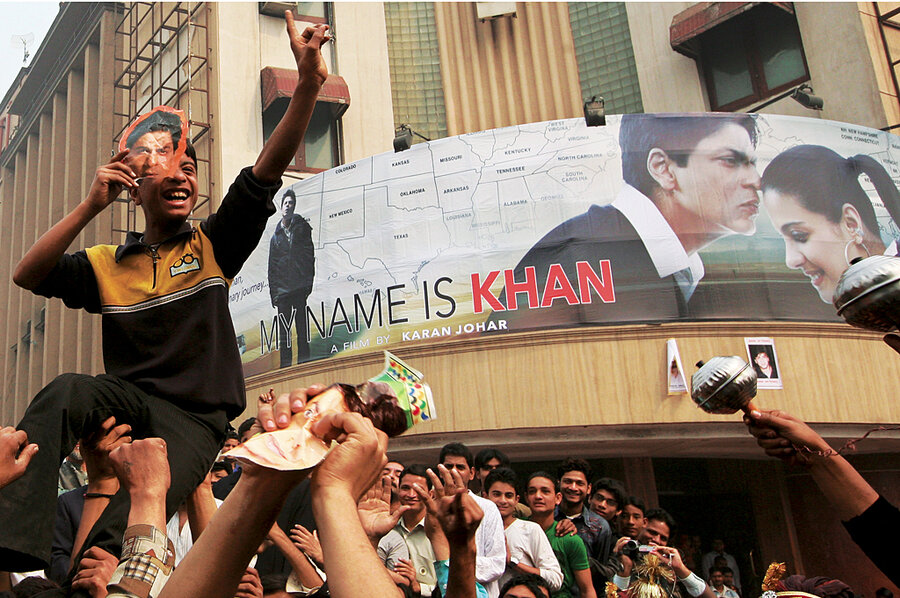
Shah Rukh Khan (often called SRK or “King Khan”) is arguably the most famous actor in the world by sheer number of fans. With a career spanning over 30 years and films like “Dilwale Dulhania Le Jayenge,” “My Name Is Khan,” and “Pathaan” (2023, which grossed over $150 million worldwide), he embodies the romantic, charming Bollywood hero. His 2023 comeback year saw three consecutive blockbusters, confirming his enduring star power.
Amitabh Bachchan, now in his 80s, remains an active and revered presence. His career has spanned five decades, from the action films of the 1970s to prestige projects like “Black” (2005) and “Pink” (2016). He is considered Indian cinema’s greatest living legend.
Among contemporary stars, Aamir Khan is known for choosing socially relevant films that become massive hits – “Dangal” (2016) about women’s wrestling earned over $300 million worldwide, making it one of the highest-grossing non-English films ever. Ranveer Singh brings explosive energy to every role, while Ranbir Kapoor has carved a niche in more nuanced, character-driven films.
Female stars have gained increasing prominence and box-office power. Deepika Padukone has crossed over to Hollywood while maintaining her Bollywood career. Alia Bhatt has delivered critically acclaimed performances in films like “Gangubai Kathiawadi.” Priyanka Chopra Jonas has built a significant international career spanning both Bollywood and Hollywood.
Essential Bollywood Films for Beginners
If you are just starting your Bollywood journey, these films represent the best entry points across different styles and eras.
“Dilwale Dulhania Le Jayenge” (1995) – The defining Bollywood romance. Shah Rukh Khan and Kajol play young Indians living in London who fall in love on a European trip. The film perfectly captures the Bollywood blend of romance, comedy, family drama, and music. It is the longest-running film in Indian cinema history.
“Lagaan” (2001) – Set in colonial India, this film about a village cricket match against British rulers was nominated for the Academy Award for Best Foreign Language Film. It is accessible, exciting, and a perfect introduction to Bollywood’s ability to blend sports drama with historical storytelling and music.
“3 Idiots” (2009) – A comedy-drama about engineering students that critiques India’s pressure-cooker education system. Starring Aamir Khan, it is the most universally enjoyable Bollywood film for Western audiences – funny, touching, and thought-provoking with catchy music.
“Dangal” (2016) – Based on the true story of wrestler Mahavir Singh Phogat who trained his daughters to become world-class athletes against fierce cultural resistance. It is a powerful underdog story with minimal musical interludes, making it the easiest entry point for viewers unfamiliar with Bollywood song-and-dance conventions.
“RRR” (2022) – Technically a Telugu-language film (from Tollywood, not Bollywood), but its massive global success and availability in Hindi makes it a perfect gateway. Director S.S. Rajamouli delivers a wildly entertaining action spectacle about two Indian revolutionaries fighting British colonial rule. The “Naatu Naatu” dance sequence is an absolute showstopper.
“Gully Boy” (2019) – Inspired by Mumbai’s underground hip-hop scene, starring Ranveer Singh as an aspiring rapper from the slums. It is modern, gritty, and musically vibrant – a great pick for younger audiences or fans of “8 Mile.”
Beyond Bollywood: India’s Other Film Industries
Having Bollywood explained for beginners should also acknowledge India’s other powerhouse film industries. The Telugu-language industry (Tollywood), based in Hyderabad, has exploded in global visibility with films like “Baahubali” and “RRR.” The Tamil-language industry (Kollywood) produces roughly 200-300 films annually, with stars like Rajinikanth commanding cult-like devotion. The Malayalam film industry (Mollywood) in Kerala is known for critically acclaimed, artistically adventurous cinema that often rivals the best work from any film industry worldwide.
The South Indian industries have increasingly outperformed Bollywood at the box office in recent years, leading to a shift in power dynamics within the broader Indian film ecosystem. Many South Indian hits are now remade in Hindi or released simultaneously in multiple languages to capture the entire Indian market.
Bollywood’s Global Cultural Impact
Bollywood’s influence extends far beyond entertainment. Its music, fashion, and dance have shaped popular culture across South Asia, the Middle East, Africa, Central Asia, and Southeast Asia. In countries like Nigeria, Peru, and Russia, Bollywood films have loyal audiences who may not speak Hindi but connect with the universal emotional themes.
Bollywood has also influenced Western cinema and entertainment. Films like “Moulin Rouge!” (2001) and “Slumdog Millionaire” (2008) drew directly from Bollywood aesthetics. The growing Indian diaspora in the US, UK, and Canada has brought Bollywood into mainstream consciousness, with Bollywood dance fitness classes, music on Western playlists, and Indian fashion trends all gaining traction.
Where to Watch Bollywood Films
Streaming has made Bollywood more accessible globally than ever. Netflix has a growing library of Bollywood films and originals. Amazon Prime Video has an extensive collection, particularly through its Indian service. Disney+ Hotstar is the most comprehensive platform for Bollywood content but is primarily available in India and select markets. YouTube hosts thousands of Bollywood films legally through official studio channels – many classic and recent films are available for free.

Key Takeaways
- Bollywood refers specifically to Mumbai’s Hindi-language film industry – not all of Indian cinema, which includes over 20 regional industries.
- India produces over 3,000 films annually with 3.6 billion cinema tickets sold, making it one of the world’s largest film markets.
- Bollywood films are distinguished by emotional maximalism, integrated song-and-dance sequences, longer runtimes (2.5-3 hours), and themes centered on family, romance, and social dynamics.
- Start your Bollywood journey with accessible films like “3 Idiots,” “Dangal,” “RRR,” or “Dilwale Dulhania Le Jayenge.”
- Bollywood music is a massive industry in its own right, with traditions ranging from Indian classical foundations to modern global pop fusion.
- Streaming platforms including Netflix, Amazon Prime, and YouTube make Bollywood more globally accessible than ever before.
Frequently Asked Questions
Why do Bollywood movies have so many songs?
Music has been integral to Indian cinema since its very first sound film in 1931. Songs serve multiple narrative purposes: they express internal emotions, advance the plot, create romantic and dramatic atmosphere, and provide entertainment value. The tradition is rooted in Indian performing arts going back thousands of years, where drama, music, and dance were inseparable. Practically, Bollywood soundtracks are also major revenue drivers – a hit soundtrack generates album sales, streaming revenue, and radio play that promote the film.
Do I need to understand Hindi to enjoy Bollywood films?
Not at all. Most Bollywood films on streaming platforms include English subtitles, and the emotional storytelling, visual spectacle, and music transcend language barriers. Many viewers worldwide enjoy Bollywood films without speaking Hindi. The themes of love, family, ambition, and overcoming obstacles are universal. Start with subtitled versions and you may find yourself picking up common Hindi phrases naturally over time.
What is the difference between Bollywood and Tollywood?
Bollywood is the Hindi-language film industry based in Mumbai. Tollywood refers to the Telugu-language film industry based in Hyderabad (and sometimes the Bengali film industry based in Tollygunge, Kolkata). Both are major segments of Indian cinema but produce content in different languages for different primary audiences. Recent Tollywood films like “Baahubali” and “RRR” have achieved massive pan-Indian and global success, sometimes outperforming Bollywood releases at the box office.
Are Bollywood films always romantic comedies?
No – Bollywood encompasses every genre. While romance is a common element (as it is in Hollywood), Bollywood produces action films, thrillers, horror, science fiction, historical epics, social dramas, and experimental art cinema. Films like “Tumbbad” (horror), “Andhadhun” (thriller), “Article 15” (social drama), and “Gangubai Kathiawadi” (crime biography) demonstrate the breadth of genres available. The stereotype of Bollywood as only song-and-dance romance is outdated.