
Table of Contents
- The Role of Lighting Design in Theater
- Basic Lighting Equipment and Fixtures
- Color Theory for Stage Lighting
- Lighting Positions and Angles
- The Lighting Design Process from Script to Stage
- Cueing, Programming, and Running a Show
- Modern Technology in Theater Lighting
- Famous Lighting Designs That Changed Theater
- Career Path: Becoming a Lighting Designer
- Key Takeaways
- Frequently Asked Questions
The Role of Lighting Design in Theater
When an audience walks into a theater and the lights dim, something magical happens. The world outside disappears, and a new reality takes its place on stage. Understanding how does lighting design work in theater begins with appreciating the enormous power that light has over human emotion and perception. Lighting is not just about making sure the audience can see the actors – it is about creating atmosphere, directing attention, establishing time and place, and amplifying the emotional storytelling that makes theater unique.
A lighting designer is one of the key creative collaborators on any theatrical production, working alongside the director, set designer, costume designer, and sound designer to create a unified artistic vision. The lighting designer reads the script, discusses the director’s vision, and then creates a plan for how light will shape every moment of the production. They decide when a scene feels warm and intimate, when it feels cold and isolating, when the audience’s focus narrows to a single performer, and when the entire stage erupts in visual spectacle.
Consider how different a scene feels under warm golden light versus harsh blue light. The words and performances are identical, but the emotional experience changes completely. This is the power of understanding how does lighting design work in theater. Jean Rosenthal, widely considered the mother of modern theatrical lighting design, said that light is “the most potent and flexible tool available to the theater artist.” Tony Award-winning designer Natasha Katz, whose credits include “An American in Paris” and “Aladdin,” has described lighting design as “painting with light in real time.”
Basic Lighting Equipment and Fixtures
Understanding how does lighting design work in theater requires knowledge of the tools that lighting designers use. Here are the fundamental fixture types found in virtually every theater.
Ellipsoidal Reflector Spotlights (ERS / Leko)
The workhorse of theatrical lighting, the ERS (commonly called a “Leko” after the original manufacturer Lekolite) produces a sharp, controllable beam of light. It has internal shutters that let you shape the beam precisely – cutting light off the proscenium, isolating a specific area of the stage, or creating geometric patterns. Gobos (metal or glass templates) can be inserted to project patterns like windows, trees, or abstract shapes. ERS fixtures are used for front light, side light, specials, and gobos. The ETC Source Four is the industry-standard ERS fixture, found in theaters worldwide.
Fresnel Spotlights
Named for the Fresnel lens they use, these fixtures produce a soft-edged, diffused beam of light. They are excellent for wash lighting – creating even, blended coverage across large areas of the stage. Fresnels are commonly hung on overhead electrics (horizontal pipes above the stage) and used for general area lighting. Their soft edges blend seamlessly with adjacent fixtures, making them ideal for creating smooth, even illumination.
PAR Cans
PAR (Parabolic Aluminized Reflector) fixtures produce a strong, slightly oval beam of light. They are simple, affordable, and versatile. PAR cans are commonly used for backlighting, creating color washes, and adding punchy, high-intensity light to musical numbers. While less controllable than ERS fixtures, their simplicity and intensity make them a staple of both theater and concert lighting.
LED Fixtures
LED technology has revolutionized theater lighting. LED fixtures can produce millions of colors without physical gel filters, change colors instantly, consume far less electricity, and generate minimal heat (a significant advantage in enclosed theater spaces). ETC’s ColorSource and Desire series, along with Chauvet’s COLORdash line, are popular LED fixtures in theater. While some purists debate whether LED light matches the warmth of traditional tungsten sources, LED technology continues to improve and is rapidly becoming the default choice for new installations.
Moving Lights (Intelligent Fixtures)
Moving lights can pan, tilt, change color, project gobos, and adjust focus – all remotely controlled from the lighting console. They add dynamic, cinematic movement to theatrical productions. Originally associated with rock concerts, moving lights are now common in Broadway productions, regional theater, and even some community theater companies. Brands like Martin, Robe, and ETC produce theater-specific moving lights designed for the quieter operation required in dramatic productions.
Color Theory for Stage Lighting
Color is one of the most powerful tools in a lighting designer’s arsenal. It establishes mood, indicates time of day, and evokes specific emotional responses.
Additive Color Mixing
Stage lighting uses additive color mixing (unlike paint, which uses subtractive mixing). The primary colors of light are red, green, and blue (RGB). Red plus green equals yellow. Red plus blue equals magenta. Green plus blue equals cyan. All three together create white. Understanding additive mixing is fundamental to knowing how does lighting design work in theater, because it governs how colored lights interact when they overlap on stage.
Color Temperature and Emotion
Warm colors (amber, gold, light pink) create feelings of comfort, intimacy, and daytime warmth. Cool colors (blue, lavender, steel) create feelings of isolation, nighttime, and mystery. Saturated colors (deep red, rich blue, vivid green) create theatrical, heightened emotional states. Neutral or “no color” light (clear or very light frost) creates a sense of reality and normalcy. A skilled lighting designer shifts color temperature throughout a production to support the emotional arc of the story.
Gel Filters and Color Selection
Traditional fixtures use gel filters – thin sheets of colored polycarbonate or polyester placed in front of the lens. Rosco and Lee Filters are the two major gel manufacturers, each offering hundreds of colors. Designers select gels based on how they affect skin tones (some blues make skin look deathly while others are more flattering), how much light they absorb (deep saturated colors can reduce output by 70-80%), and how they interact with costumes and scenic paint under stage lighting.
Lighting Positions and Angles
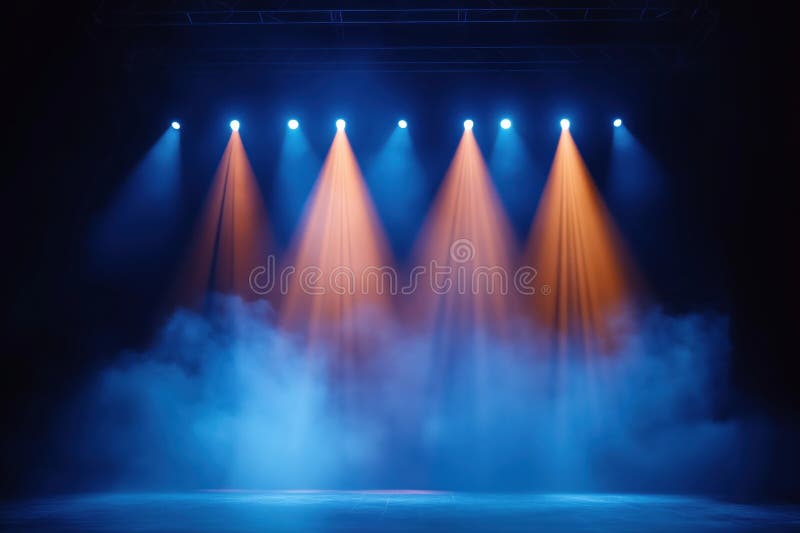
Where a light is positioned relative to the performer dramatically affects how they look and feel on stage.
Front Light
Light from the front of the house (the audience area) illuminates actors’ faces for visibility. The ideal front light angle is approximately 45 degrees above the performer’s eye line and 45 degrees to either side. This creates natural-looking shadows under the chin and nose without obscuring facial features. Too much front light flattens the stage picture and eliminates depth.
Side Light
Light from the wings (sides of the stage) sculpts the performers’ bodies and creates dramatic depth. Side light is especially important in dance, where it defines the dancers’ shapes and movements. Shin busters (lights mounted at floor level in the wings) create long dramatic shadows and are a signature element of dance lighting. The legendary lighting designer Jennifer Tipton is renowned for her masterful use of side light in dance productions.
Back Light
Light from behind the performers creates a rim of light around their heads and shoulders, separating them from the background and adding a three-dimensional quality. Back light is one of the most visually striking techniques in theater lighting – it creates an almost angelic glow around performers and is used extensively in musical theater to create moments of heightened drama and beauty.
Down Light
Light from directly above creates harsh shadows in the eye sockets and under the nose, which can look eerie and unsettling. Down light is used deliberately for dramatic effect – horror scenes, moments of despair, or stylized dance numbers. A single down light (called a “special”) can isolate a performer in a pool of light while the rest of the stage remains dark, creating an intimate, focused moment.
The Lighting Design Process from Script to Stage
The lighting design process for a professional theater production typically spans several months. Here is how it unfolds.
Script Analysis
The designer reads the script multiple times, noting every reference to light and time – “morning sun streams through the window,” “the streetlamp flickers outside,” “the room plunges into darkness.” They also analyze the emotional arc of each scene and the overall story. This analysis forms the foundation of the design concept.
Concept Meetings
The designer meets with the director and other designers to discuss the production’s visual concept. What is the overall mood? Is the world realistic or abstract? What role should light play in storytelling? These conversations establish the shared artistic vision that guides all design decisions. The lighting designer might create mood boards, reference images, and preliminary sketches to communicate their ideas visually.
The Light Plot
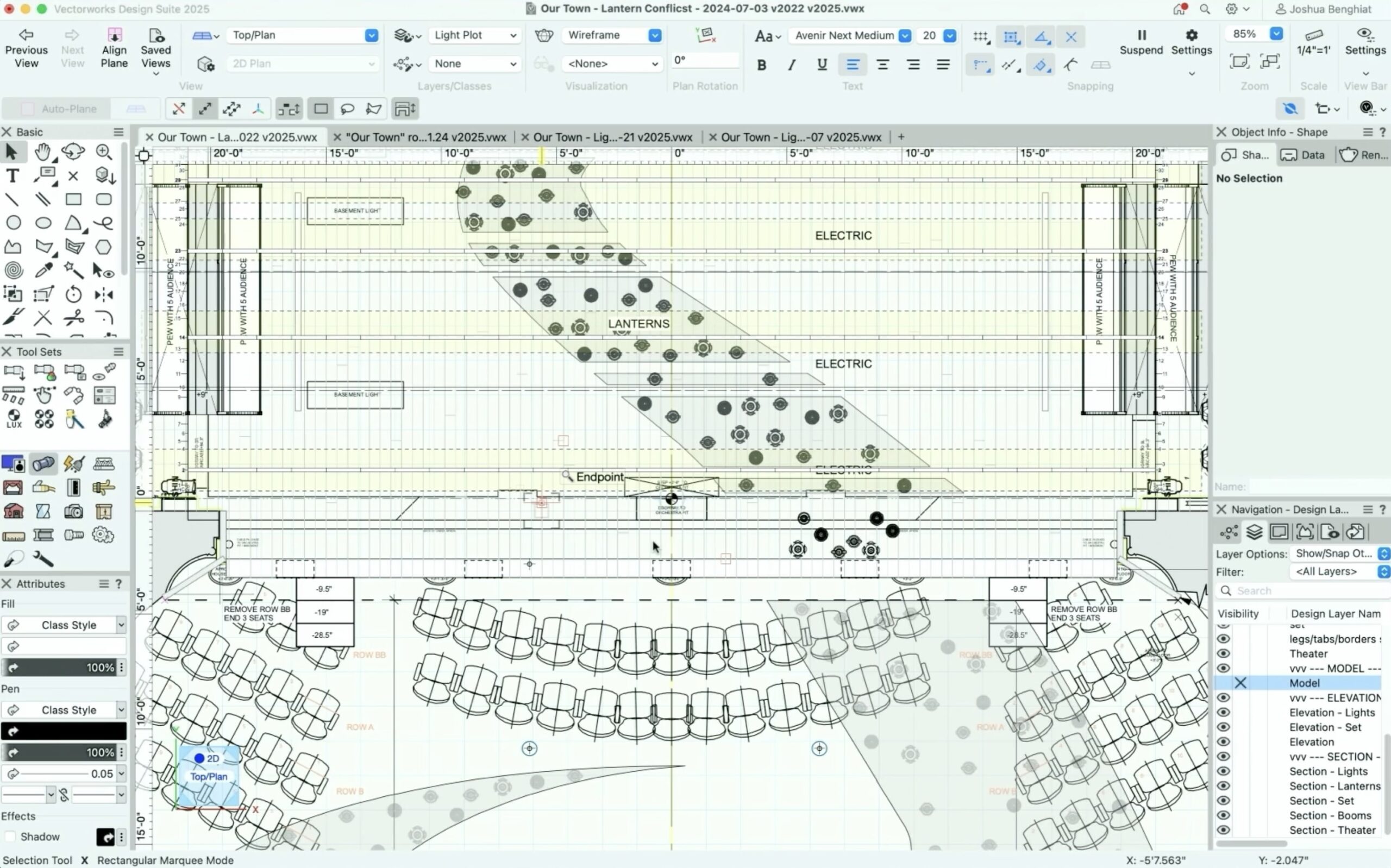
The light plot is the technical blueprint of the design – a detailed drawing showing the exact position, type, color, circuit, and dimmer channel of every lighting fixture. A Broadway musical might have 400 to 800 fixtures, each precisely positioned according to the light plot. Designers create light plots using software like Vectorworks or AutoCAD. The light plot is the document that the electrics crew uses to hang and focus every instrument.
Focus and Technical Rehearsals
During the focus session, the designer stands on stage and directs an electrician to point each fixture exactly where it needs to go – adjusting the angle, beam size, and edge quality of every single light. This process can take 8 to 16 hours for a large production. Technical rehearsals follow, where the designer watches the show for the first time with actors and writes lighting cues in real time, adjusting levels, timing, and transitions.
Cueing, Programming, and Running a Show
A lighting cue is a specific look – a combination of fixture intensities, colors, and positions – that the lighting console stores and recalls on command.
Cue Structure
A production’s lighting is structured as a sequence of cues numbered chronologically. Cue 1 might be the pre-show preset (the look the audience sees when they enter). Cue 5 might be the opening scene’s first light change. A simple play might have 50 to 100 cues. A complex musical can have 300 to 600 cues or more. Each cue includes the intensity level of every relevant fixture and the timing of the transition (how fast the change happens).
Timing and Transitions
The timing of a cue change profoundly affects its impact. A 0-second snap cue (instant change) creates shock or surprise. A 3-second fade creates a smooth, natural transition. A 15-second slow fade creates an imperceptible shift that the audience feels more than sees. A skilled designer uses timing as an expressive tool, matching the rhythm of cue changes to the rhythm of the performance.
The Lighting Console
The lighting console is the brain of the system. Industry-standard consoles include the ETC Eos family (the dominant choice in theater), grandMA (popular in concert and event lighting), and ETC Ion (a more affordable option for smaller theaters). The console stores all cues and allows the board operator to trigger them during performances. Modern consoles can control thousands of parameters across hundreds of fixtures simultaneously.
The Board Operator
During performances, a board operator (not the designer) runs the show by pressing the “Go” button at precisely the right moment for each cue. The stage manager calls each cue over headset (“Standby LX 47… LX 47, go”), and the operator executes it. The precision required is remarkable – a cue triggered one second too early or too late can undermine the dramatic impact of a moment.
Modern Technology in Theater Lighting
Theater lighting technology continues to evolve rapidly, and understanding these developments is part of knowing how does lighting design work in theater today.
LED Revolution
LED fixtures now account for the majority of new installations in theaters worldwide. They offer energy savings of 50-80% compared to traditional tungsten fixtures, produce minimal heat, offer infinite color mixing without gel changes, and have lifespans of 50,000+ hours (compared to 300-2,000 hours for traditional lamps). The ETC Source Four LED Series 3 delivers color rendering quality that satisfies even the most demanding designers.
Pixel Mapping and Video Integration
Modern productions increasingly integrate video projection with lighting. Pixel-mapped LED strips and panels can display video content while also functioning as lighting instruments. Productions like “Dear Evan Hansen” and “Hadestown” on Broadway use sophisticated video and lighting integration to create immersive visual worlds that would have been impossible a decade ago.
Pre-Visualization Software
Software like WYSIWYG, Capture, and Depence allows designers to visualize their lighting design in a 3D virtual environment before ever entering the theater. They can program cues, test color combinations, and experiment with positions – all from their home computer. This technology dramatically reduces expensive tech rehearsal time and allows designers to arrive at the theater with fully programmed shows ready for refinement.
Famous Lighting Designs That Changed Theater
Several landmark lighting designs have pushed the art form forward and influenced how we understand how does lighting design work in theater.
Jennifer Tipton – “The Phantom of the Opera” (concept lighting): Tipton’s work across decades of dance and theater has influenced virtually every lighting designer working today. Her ability to sculpt space and emotion with light – particularly her masterful use of side light – set new standards for the art form.
Natasha Katz – “The Glass Menagerie” (2013): Katz created a liquid, dreamlike world of light that perfectly captured Tennessee Williams’ “memory play” concept. The production used light as a storytelling device, with pools of warm memory dissolving into the harsh reality of the Wingfield apartment.
Howell Binkley – “Hamilton”: Binkley’s Tony Award-winning design for “Hamilton” used a modern, concert-inspired approach with moving lights and dynamic color to support the show’s revolutionary energy. His design proved that contemporary lighting techniques could enhance rather than undermine serious dramatic storytelling.
Career Path: Becoming a Lighting Designer
For those inspired to pursue lighting design professionally, here is the typical career path.
Education: Most professional lighting designers hold a BFA or MFA in lighting design or theatrical design from programs like Yale School of Drama, Carnegie Mellon, NYU Tisch, or CalArts. These programs provide hands-on training in equipment, design theory, drafting, and professional practice. However, some designers are self-taught, starting in community theater or concert lighting.
Assistantships: After school, emerging designers typically work as assistant lighting designers on professional productions. This means helping established designers with paperwork, focus sessions, and cueing. It is demanding, low-paying work, but it provides invaluable mentorship and industry connections.
Building a Portfolio: Designers build their careers by designing smaller productions – Off-Off-Broadway, regional theater, dance companies, opera – and gradually working up to larger venues and higher-profile shows. A strong portfolio of production photos and documentation is essential.
Income: Regional theater lighting designers earn $2,000 to $10,000 per production. Broadway designers earn $25,000 to $100,000+ per production plus ongoing royalties. The most established Broadway designers earn six-figure annual incomes. Supplemental income often comes from corporate events, concert tours, and architectural lighting.
Key Takeaways
- Lighting design is a critical storytelling tool that controls mood, focus, time, and emotion in theatrical productions
- The main fixture types – ERS (Leko), Fresnel, PAR, LED, and moving lights – each serve specific purposes in a design
- Color in stage lighting uses additive mixing (RGB), and warm versus cool tones profoundly affect emotional perception
- Lighting angles (front, side, back, down) each create distinct visual effects and are combined for dimensional, nuanced looks
- The design process involves script analysis, concept meetings, light plotting, focus sessions, and tech rehearsals
- LED technology is revolutionizing theater lighting with energy efficiency, infinite colors, and minimal heat
- Professional lighting designers typically hold MFA degrees and build careers through assistantships and small productions
Frequently Asked Questions
How many lights does a typical theater production use?
The number varies dramatically by venue and production scale. A small community theater production might use 30 to 60 fixtures. A regional theater musical typically uses 100 to 250 fixtures. A Broadway musical can use 400 to 800 or more fixtures, including moving lights, LED fixtures, and follow spots. “The Phantom of the Opera” on Broadway used over 700 lighting instruments. The number of fixtures is determined by the size of the stage, the complexity of the design, and the budget of the production.
What is the difference between a lighting designer and a lighting technician?
A lighting designer is the creative artist who conceives the visual concept, creates the light plot, and writes the cues. They make artistic decisions about how light tells the story. A lighting technician (or electrician) is the skilled professional who physically hangs, focuses, cables, and maintains the lighting equipment according to the designer’s specifications. Some people do both, especially in smaller theaters, but in professional productions these are distinct roles with different skill sets and training.
Can I learn theater lighting design without going to school?
Yes, though formal education provides significant advantages in terms of mentorship, hands-on training, and industry connections. Many lighting professionals started by volunteering at community theaters, churches, or school productions. Learning the equipment, reading books like “A Practical Guide to Stage Lighting” by Steven Shelley, and studying professional designs by attending theater are all valuable self-education paths. Online resources like ETC’s learning portal and the USITT (United States Institute for Theatre Technology) offer workshops and training materials.
How has LED technology changed theater lighting?
LED technology has fundamentally transformed theater lighting in several ways. It has eliminated the need for gel filters (LEDs mix colors electronically), reduced electricity costs by 50-80%, eliminated the heat that traditional fixtures generate (which affected actor comfort and air conditioning costs), extended lamp life from hundreds of hours to tens of thousands, and enabled new creative possibilities like pixel mapping and instant color changes. The main criticism – that early LEDs did not match the warm quality of tungsten light – has been largely addressed by newer LED fixtures with improved color rendering.